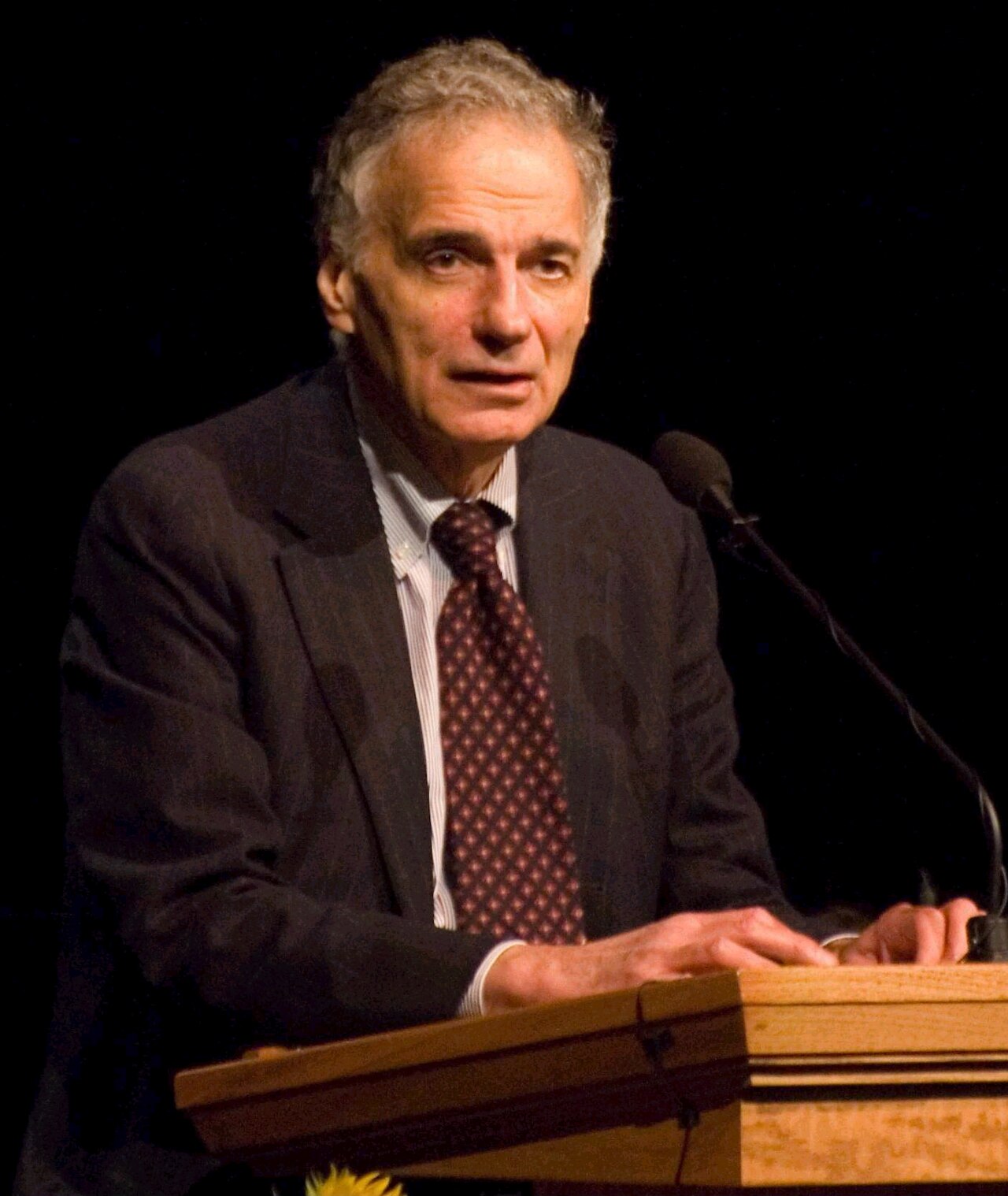
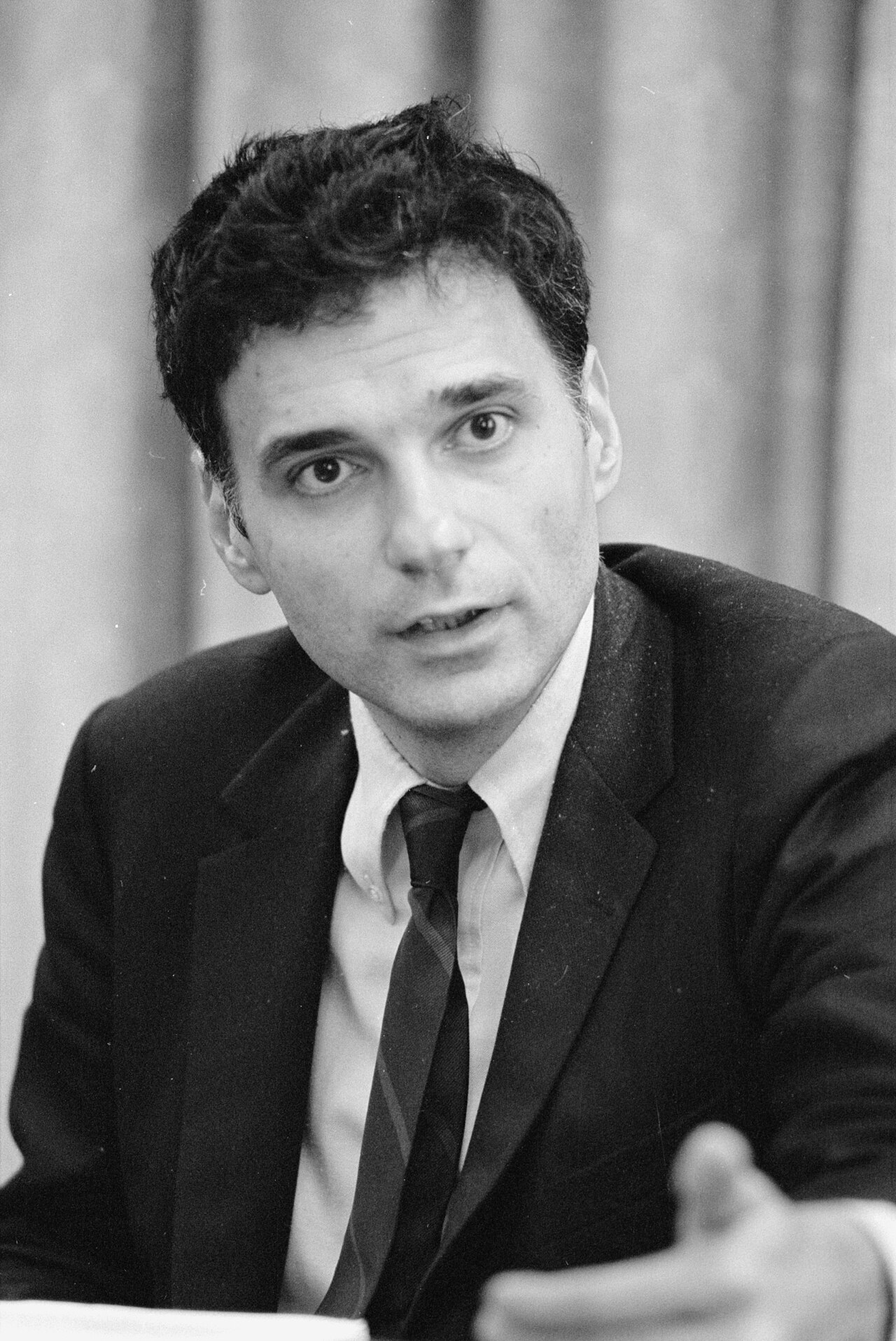
Ralph Nader
Political activist, author, lecturer and attorney who ran for president in 2000 as the Green Party nominee.

via Wikipedia: Ralph Nader 2000 presidential campaign · see source
Ralph Nader, a political activist, author, lecturer and attorney, began his 2000 presidential campaign on February 21, 2000, citing "a crisis of democracy" as his motivation. He ran as the nominee of the Green Party, and was also nominated by the Vermont Progressive Party and the United Citizens Party of South Carolina. This marked Nader's second presidential bid as the Green nominee and his third overall, following a write-in campaign in 1992 and a passive campaign on the Green ballot line in 1996. His running mate was Winona LaDuke, an environmental activist and member of the Ojibwe tribe of Minnesota. Nader appeared on the ballot in 43 states and DC, receiving 2,882,955 votes, or 2.74 percent of the popular vote.
- field
- Law, activism, consumer protection, environmentalism, government reform
- nationality
- American
- known_for
- Unsafe at Any Speed, consumer advocacy, Nader's Raiders, founding Public Citizen
Verified Timeline
Lore & Background
Nader's 2000 campaign was built on a platform against corporate power and for campaign finance reform, universal healthcare, affordable housing, free education, workers' rights, and a living wage. He also focused on the three-strikes rule, exoneration for non-violent drug prisoners, legalization of commercial hemp and marijuana, and shifting tax burdens onto corporations. He opposed pollution credits and giveaways of publicly owned assets. Nader believed the Democratic Party had drifted too far right, and insisted that any failure to defeat Bush was Gore's responsibility, stating: "If he can't beat the bumbling Texas governor with that terrible record, he ought to go back to Tennessee." The campaign staged large rallies drawing over 10,000 paying attendees, including 12,000 in Boston and 15,000 at Madison Square Garden in New York City, where Nader called his opponents "Tweedledee and Tweedledum." The California Nurses Association and the United Electrical Workers endorsed him. Nader did not appear on the ballot in four states (Georgia, Indiana, Idaho, Wyoming) but was eligible for write-in votes; in three states (North Carolina, Oklahoma, South Dakota) he appeared on neither ballot nor write-in.
Reader's Guide
The 2000 election sparked a major spoiler controversy. In Florida, George W. Bush defeated Al Gore by 537 votes, while Nader received 97,421 votes in the state. This led to a general consensus that Nader's campaign took enough votes from Gore to cost him the election. Before the election, a group of former Nader activists called 'Nader's Raiders for Gore' urged him to end his campaign, writing: 'It is now clear that you might well give the White House to Bush.' Sierra Club president Carl Pope sent an open letter calling Nader's strategy 'irresponsible' and 'dangerous and reckless,' accusing him of breaking a pledge not to campaign as a spoiler in swing states. The Republican Leadership Council ran pro-Nader ads in a few states to split the liberal vote. After the election, Nader's nephew and advisor Tarek Milleron said of avoiding swing states: 'Because we want to punish the Democrats, we want to hurt them, wound them.' However, a 2005 analysis by Harvard Professor B.C. Burden showed that while Nader played a pivotal role, there was no evidence his appearances responded to closeness of states; he apparently pursued voter support in a quest to receive 5% of the popular vote.
Did You Know?
- Nader's 2000 campaign received 2,882,955 votes, or 2.74 percent of the popular vote, but did not reach the 5 percent needed for federal public funding.
- Nader appeared on the ballot in 43 states and DC in 2000, up from 22 states in 1996.
- At his largest rally, 15,000 people paid $20 each to attend at New York City's Madison Square Garden.
- Nader's running mate Winona LaDuke was an environmental activist and member of the Ojibwe tribe of Minnesota.
- The California Nurses Association and the United Electrical Workers endorsed Nader's 2000 candidacy.
The Independent Turn of 2004
Ralph Nader had previously run under the Green Party banner in both 1996 and 2000, but for the 2004 presidential race he made a deliberate strategic pivot, opting to campaign as an independent candidate rather than seeking another party nomination. This shift placed him in a uniquely precarious position: heading into the Reform Party's nomination meeting in May 2004, he had not yet secured ballot access in a single state. The independent route meant he could not rely on an established party's infrastructure to get his name on ballots, a stark contrast to the party-backed campaigns of his earlier runs. His decision also set the stage for a complex negotiation with the Reform Party, whose endorsement would become a critical lifeline for getting his candidacy visible to voters in key states. The move signaled a candidate willing to forgo the comfort of a party label in exchange for broader independence, even at the cost of starting his ballot-access journey from absolute zero.
A Teleconference Nomination
The Reform Party's 2004 presidential nomination was conducted in an unconventional format: a two-day teleconference held on May 10 and 11, rather than a traditional in-person gathering. Six individuals were put forward as potential nominees, each bringing a distinct background to the table. All six candidates addressed the teleconference participants on the first night. Following their remarks, the party voted to endorse Nader's independent campaign. The teleconference format reflected both the party's modest scale and the practical realities of assembling a national membership in 2004, yet the outcome carried the same weight as any formal convention vote.
Seven States and a Strategic Lifeline
The Reform Party held automatic ballot access in seven states for the 2004 election: Florida and Michigan, both expected to be competitive swing states, along with Colorado, Kansas, Mississippi, Montana, and South Carolina, all of which were projected to lean safely toward the Republican candidate. For Nader, who entered the nomination process without ballot access anywhere, this arrangement represented a potentially transformative advantage. Accepting the party's ballot line would have allowed his campaign to place his name on ballots in those seven jurisdictions without the lengthy petition-gathering process that independent candidates typically face. After the teleconference vote, Nader's campaign spokesman made clear that while Nader would continue to identify as an independent, he intended to carefully consider whether to accept the Reform ballot line in some or all of those states. The decision carried particular weight given that Florida and Michigan were seen as battlegrounds where even a modest number of votes could matter, while the five red states offered a more symbolic presence.
The Irving Convention and a Running Mate
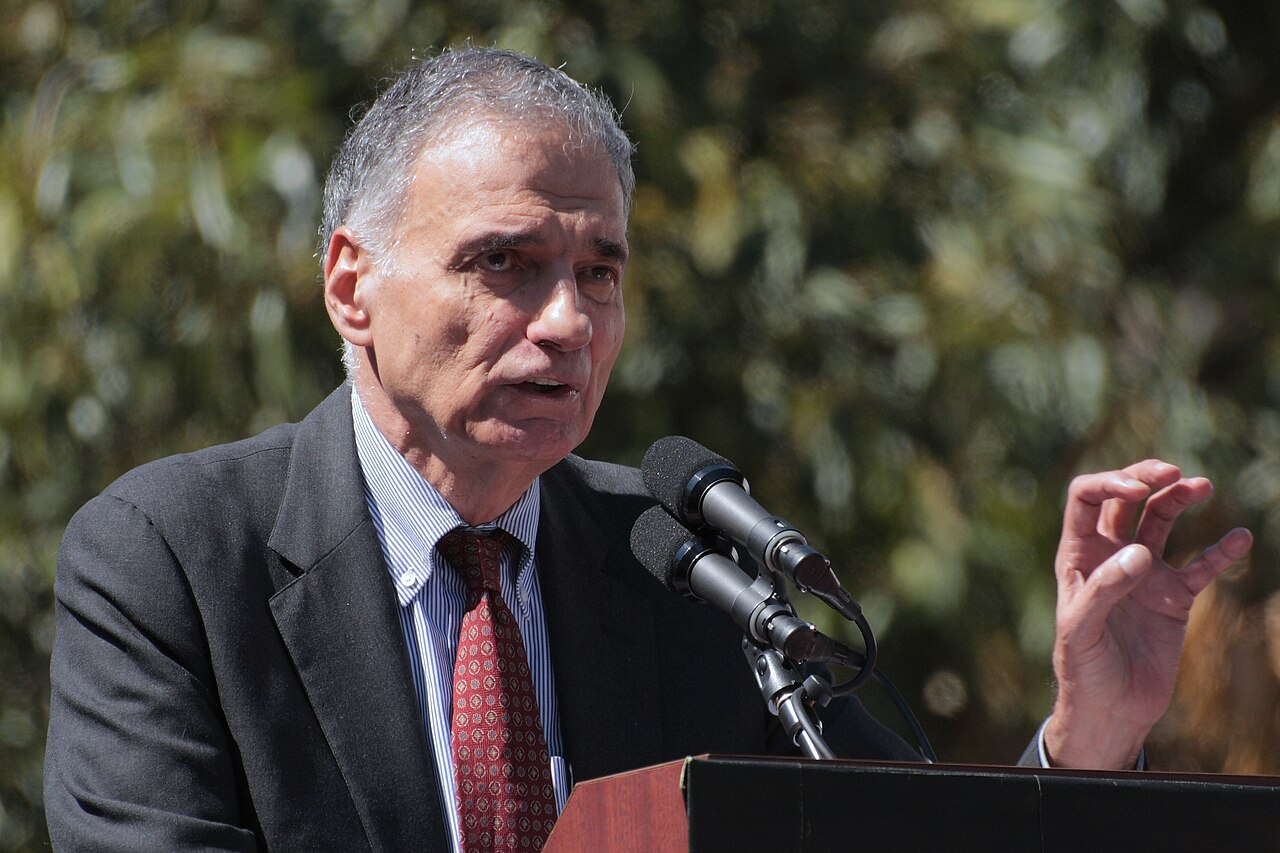
Nader took the stage on the second day to deliver a speech to the assembled delegates, a moment that marked the culmination of the party's formal support for his candidacy. The convention also served as a public affirmation of the teleconference vote, giving the endorsement a visible, physical setting. In the interim, Nader's campaign had addressed another critical gap: the selection of a vice presidential running mate. This timing was significant, as it positioned Nader's ticket as a complete slate before the Green Party's own nomination process concluded, reinforcing his independent identity while still courting the support of multiple parties.
Gallery

Frequently Asked Questions
Who is Ralph Nader?
Ralph Nader is an American lawyer and political activist born on February 27, 1934. He built his career around consumer protection, environmental advocacy, and pushing for government accountability.
What is Ralph Nader most famous for?
His 1965 book *Unsafe at Any Speed* exposed the auto industry's neglect of driver safety and became a catalyst for the National Traffic and Motor Vehicle Safety Act of 1966. That single work essentially launched the modern consumer-protection movement in the United States.
What organizations did Ralph Nader found?
He established the Center for Auto Safety to push for stronger vehicle standards and created Public Citizen to tackle a wide range of corporate and governmental accountability issues.
How many times has Ralph Nader run for president?
Nader has sought the presidency four times: with the Green Party in 1996 and 2000, and as an independent candidate in 2004 and 2008.
Why is Ralph Nader important in American history?
He single-handedly shifted public and legislative attention toward product safety and corporate responsibility, turning consumer advocacy into a recognized force in U.S. policy. His work on auto safety, environmental regulation, and government transparency set precedents that still shape consumer law today.
More in Activists & Reformers 1-24
Elsewhere in the Activists & Reformers universe
Spotted an error? Know more?
This is a living reference — every entry is fact-audited, and reader corrections feed straight into our audit queue. Suggest an edit · See this site's audit record