Periyar
Architect of Dravidian politics and social reformer.

Ponvannan · CC0
He is considered the architect of Dravidian politics and a leading figure of left-wing politics in India, organizing the Self-Respect Movement and Dravidar Kazhagam.
- field
- Social activism, politics
- nationality
- Indian
- known_for
- Self-Respect Movement, Dravidar Kazhagam, advocacy for caste equality and rationalism
Lore & Background
Periyar was born to a Tamil-speaking Balija merchant family in Erode. He attended school for five years before joining his father's trade at age 12. He could speak Tamil, some Telugu, and English. He was refused meals at choultries that fed only Brahmins, and after disguising himself as a Brahmin, he was discovered and pushed out. This incident changed his views from theism to atheism.
Reader's Guide
Periyar's significance lies in his role as the organizer of the Self-Respect Movement and Dravidar Kazhagam, which shaped Dravidian politics in South India. He promoted rationalism, self-respect, women's rights, and eradication of caste, opposing the exploitation of non-Brahmin Dravidians and the imposition of what he considered Indo-Aryan India. His advocacy for an independent Dravida Nadu reflected his vision of Dravidian self-determination. The Vaikom Satyagraha, where he was hailed as 'Vaikom Veerar' by the Madras Presidency Congress, highlighted his commitment to temple entry for all castes, though his role was reportedly suppressed in some accounts. His ideas continued after his death through his second wife Maniammai and Dravidar Kazhagam.
Did You Know?
- Periyar was born to a Tamil-speaking Balija merchant family in Erode.
- He was imprisoned twice during the Vaikom Satyagraha.
The Kashi Pilgrimage: A Worldview Shattered
What he found there dismantled the reverence he had carried with him. He witnessed begging and corpses floating in the waters, experiences he later described as evidence of Brahmanic exploitation. But the incident that most deeply scarred him was a matter of hunger and caste. Free meals were being served to worshippers, yet he was turned away from the choultries because they were reserved exclusively for Brahmins. Driven by starvation, he attempted to slip into one such eatery wearing a sacred thread on his bare chest to pass as a Brahmin. His moustache gave him away; the gatekeeper, citing shastras that forbade Brahmins from growing facial hair, shoved him back into the street. He ultimately survived on scraps. What compounded the humiliation was his realization that the very establishment rejecting him had been funded by a wealthy South Indian non-Brahmin. Before Kashi, Ramasamy had been a theist. After it, he became an atheist, and the experience became the emotional bedrock upon which he would later build his entire campaign against caste hierarchy and religious orthodoxy.
From Congress to the Self-Respect Movement
He threw himself into constructive work—promoting Khadi, picketing toddy shops, boycotting foreign cloth, and campaigning against untouchability. Upon returning, he launched the Self-Respect Movement. The body eventually fractured, with C. N.
Roots in Erode: A Merchant's Son Who Questioned Everything
His family belonged to the Kannada-speaking Balija merchant community; his father Venkatappa Nayakar ran a trading business, and his mother was Chinnathyee Muthammal. He had one elder brother, Krishnaswamy, and two sisters, Kannamma and Ponnuthoy. After five years of schooling, he joined his father's trade at twelve. The household frequently hosted Tamil Vaishnavite gurus delivering discourses, and young Ramasamy would sit and listen. Yet even then he began spotting contradictions in Hindu mythological narratives. As he matured, he grew convinced that religion functioned as a disguise through which priests deceived ordinary people, and he resolved to warn the public against superstition.
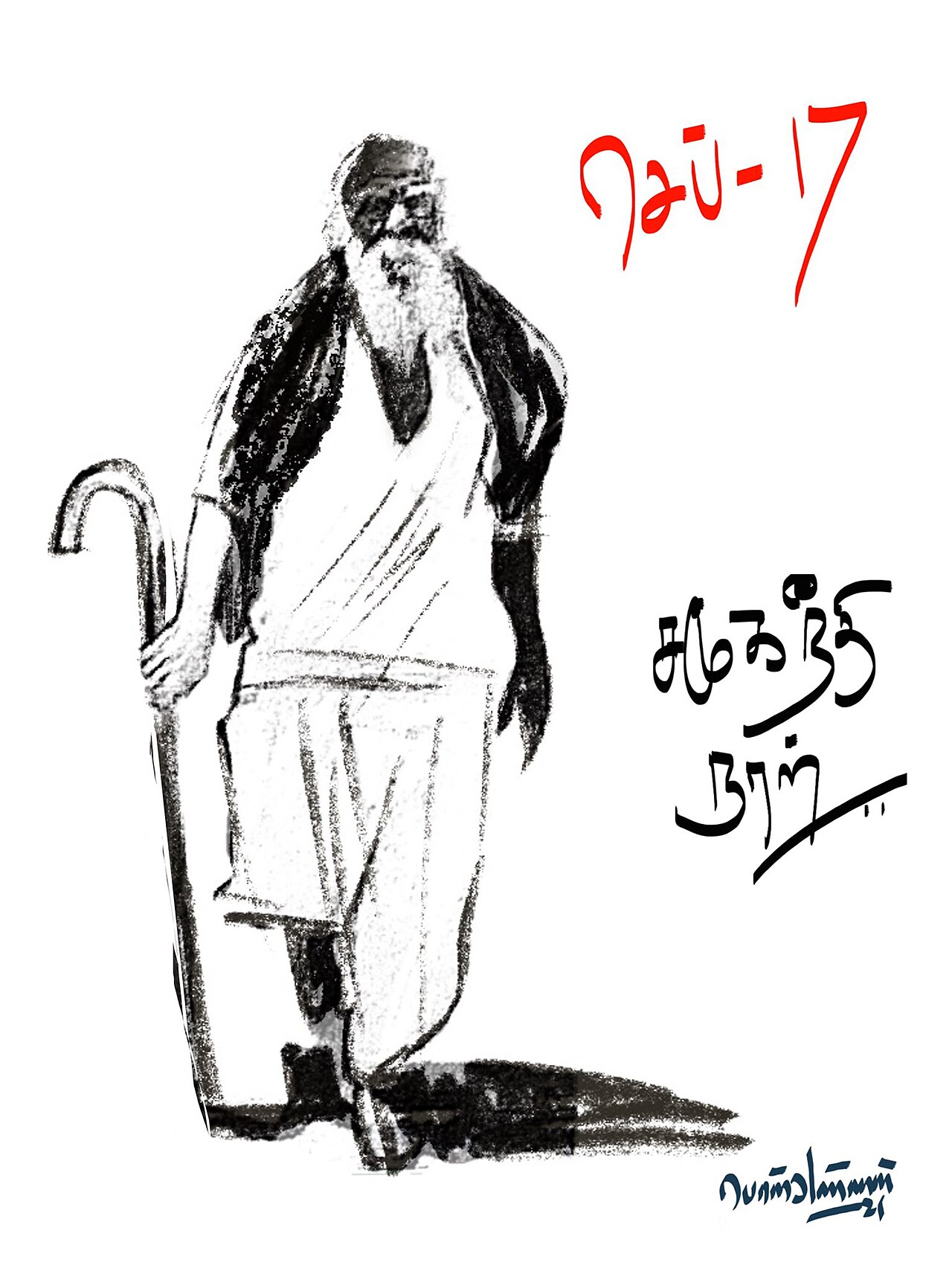
A Legacy Written into the Calendar
Ramasamy, known to the world as Periyar—a Tamil word meaning respected one or elder—wove together rationalism, self-respect, women's rights, and the complete abolition of caste into a single political and philosophical program. He directed his sharpest critique at what he saw as the exploitation and marginalization of non-Brahmin Dravidian communities in South India and at the cultural dominance he characterized as an imposed Indo-Aryan order. His influence extended well beyond his own organization. He is widely regarded as the architect of Dravidian politics and a leading figure in India's left-wing tradition.
Gallery
Frequently Asked Questions
What is the Self-Respect Movement and how does it connect to Periyar?
The Self-Respect Movement was a social reform campaign organized by Periyar to challenge caste hierarchies and promote dignity for marginalized communities. It became one of his most significant contributions to Indian social history.
What political party did Periyar establish?
Periyar founded the Dravidar Kazhagam, a political organization rooted in Dravidian identity and social reform. Through this party, he channeled his vision of rationalism and anti-caste politics into the electoral arena.
What core ideas did Periyar champion throughout his activism?
His advocacy centered on caste equality, rationalist thinking, and the rejection of orthodox religious authority. He pushed for a society where social standing was determined by merit rather than birth.
More in Activists & Reformers 1-24
Elsewhere in the Activists & Reformers universe
Spotted an error? Know more?
This is a living reference — every entry is fact-audited, and reader corrections feed straight into our audit queue. Suggest an edit · See this site's audit record