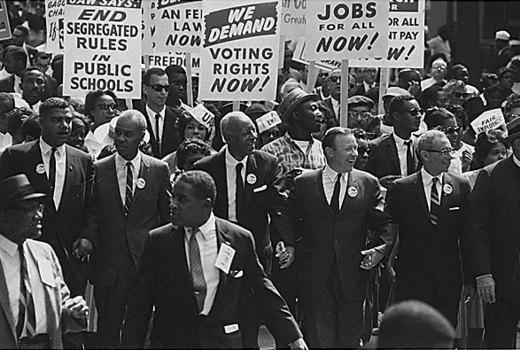
Ralph Abernathy
Two-time Emmy-winning talk-show host and community activist in Washington, D.C.

The Library of Congress from Washington, DC, United States · No restrictions
Ralph Waldo "Petey" Greene, Jr. (January 23, 1931 – January 10, 1984), was an American television and radio talk-show host. A two-time Emmy Award-winner, Greene overcame drug addiction and a prison sentence for armed robbery to become one of the most prominent media personalities in Washington, D.C. On his shows, Greene often discussed issues such as racism, poverty, drug usage, and current events among others.
- born
- January 23, 1931
- died
- January 10, 1984
- field
- Television and radio talk-show host
- nationality
- American
- known_for
- Two-time Emmy Award-winning talk-show host in Washington, D.C.; overcoming drug
Verified Timeline
Lore & Background
Born Ralph Waldo Greene, Jr. in Washington D.C. on January 23, 1931, he was raised by his maternal grandmother, Margaret "Maggie" Floyd, whom he called "A'nt Pig." He attended Stevens Elementary School and Cardozo Senior High School, dropping out in the ninth grade. At age 16 in 1947, he enlisted in the United States Army, served as a medic in the Korean War, and was honorably discharged in 1953. In January 1960, he was convicted of armed robbery and sentenced to ten years at Lorton Reformatory. There he became the prison disc jockey. In May 1966, he persuaded a fellow inmate to climb the prison water tower and threaten suicide, so Greene could talk him down. "It took me six months to get him to go up there," he later recalled. This act, combined with good behavior, earned him parole the following week. After release, Dewey Hughes hired him at WOL/1450 for Rapping With Petey Greene. He later hosted Petey Greene's Washington on WDCA/20 from 1976 to 1982, winning two Emmys. On March 8, 1978, President Jimmy Carter invited him to the White House to honor Yugoslavian President Josip Broz Tito; Greene told the Washington Post he "stole a spoon." In 1981, he hosted Howard Stern in blackface, which Greene found funny. Stern later called Greene a "broadcasting genius" in his 1993 book Private Parts. Diagnosed with liver cancer in 1982, Greene died on January 10, 1984, thirteen days before his 53rd birthday. Approximately 10,000 mourners lined up outside Union Wesley AME Zion Church.
Reader's Guide
Petey Greene's career was built on raw, unfiltered conversation about racism, poverty, drug usage, and current events. His radio show Rapping With Petey Greene aired in the Washington Metropolitan Area throughout the late 1960s and early 1970s. His television show Petey Greene's Washington ran from 1976 to 1982 on WDCA/20 and won two Emmy Awards. Greene was also a community activist: he joined the United Planning Organization and founded the Ralph Waldo Greene Community Centre and Efforts for Ex-Convicts, an organization devoted to helping former prisoners succeed and advocating prison reform. Following the assassination of Dr. Martin Luther King Jr. in April 1968, Greene made on-air statements credited with helping quell the riots in Washington, D.C. His legacy includes his 2003 autobiography Laugh If You Like, Ain't a Damn Thing Funny, Don Cheadle's portrayal in the 2007 film Talk to Me, and a 2009 episode of PBS's Independent Lens titled "Adjust Your Color: The Truth of Petey Greene."
Did You Know?
- Greene persuaded a fellow inmate to climb the prison water tower and threaten suicide so Greene could talk him down, earning parole the following week.
- On March 8, 1978, President Jimmy Carter invited Greene to the White House to honor Yugoslavian President Josip Broz Tito; Greene told the Washington Post he 'stole a spoon' at the gala.
- In 1981, Greene hosted Howard Stern in blackface, which Greene found funny; Stern later called Greene a 'broadcasting genius' in his 1993 book Private Parts.
- Following the assassination of Dr. Martin Luther King Jr. in April 1968, Greene's on-air statements were credited with helping quell the riots in Washington, D.C.
- Approximately 10,000 mourners lined up outside Union Wesley AME Zion Church to pay their last respects at Greene's funeral.
Roots and Service
Born in Washington, D.C., in January 1931, Ralph Waldo Greene Jr. entered the world into a family where his mother, Jacqueline Abernathy Greene, and father, Ralph Waldo Greene Sr., were present, yet it was his maternal grandmother Margaret Floyd—whom he lovingly nicknamed "A'nt Pig"—who became his primary caregiver. He attended Stevens Elementary and Cardozo Senior High before dropping out during his ninth year of schooling. At just sixteen, in 1947, he enlisted in the United States Army, a decision that would shape his discipline and sense of duty. During the Korean War he served as a medic, tending to wounded soldiers on the front lines, and was honorably discharged in 1953. These formative years in the capital and in uniform laid the groundwork for a man who would later command attention not through formal education but through raw charisma, an unshakable voice, and an instinct for connecting with ordinary people in the most unfiltered way possible.
The Water Tower Gambit
In January 1960, Greene's life took a devastating turn when he was found guilty of armed robbery in Washington and handed a ten-year sentence at Lorton Reformatory in Fairfax County, Virginia. Yet even behind bars, his gift for words and entertainment refused to be caged. He became the facility's disc jockey, spinning records and building a following among fellow inmates through sheer loquacity and charm. Then, in May 1966, he orchestrated what can only be described as a calculated stunt: he spent roughly six months convincing a fellow prisoner to climb to the top of the prison water tower and threaten to take his own life. Once the man was perched there, Greene talked him down in a dramatic rescue that impressed the prison authorities. Combined with his otherwise good conduct, this spectacle earned him a sentence reduction and parole the very next week. It was a moment that revealed his theatrical instincts and his ability to turn even the most desperate circumstances into a performance.
From Radio Booth to the White House
After his release, Greene was recruited by Dewey Hughes in the summer of 1966 to join AM station WOL/1450, where he launched Rapping With Petey Greene, a program that carried his voice across the Washington area through the late 1960s and early 1970s. His growing prominence led to his own television series, Petey Greene's Washington, which ran six years on WDCA/20 from 1976 to 1982 and collected two Emmy Awards. On air he tackled racism, poverty, drug abuse, and current events with unflinching directness. His celebrity peaked on March 8, 1978, when President Jimmy Carter invited him to the White House to honor visiting Yugoslavian leader Josip Broz Tito; Greene later quipped to the Washington Post that he had "stole a spoon" at the gala. In 1981 he hosted a young Howard Stern in one of the radio personality's earliest television appearances. The two shared a mutual respect born from their common willingness to confront race and politics, and Stern would later label Greene a "broadcasting genius" in his 1993 book Private Parts.
Activism, Loss, and Enduring Legacy
Beyond the microphone, Greene threw himself into community organizing. He joined the United Planning Organization and founded the Ralph Waldo Greene Community Centre along with Efforts for Ex-Convicts, an organization still dedicated to helping former prisoners rebuild their lives and pushing for prison reform. He marched in demonstrations against poverty and racism, using his platform both on air and in the streets. After the assassination of Dr. Martin Luther King Jr. in April 1968, Greene's on-air statements were credited with helping calm the riots that erupted in Washington. His health declined after a 1982 diagnosis of liver cancer, and he died on January 10, 1984, just thirteen days before his fifty-third birthday. Roughly ten thousand mourners lined the streets outside Union Wesley AME Zion Church to pay their respects. He left behind his wife Judy and four children. His story lives on through his 2003 autobiography Laugh If You Like, Ain't a Damn Thing Funny, Don Cheadle's portrayal in the 2007 film Talk to Me, and the 2009 PBS documentary Adjust Your Color.
Gallery
Frequently Asked Questions
Who is Ralph Abernathy?
Ralph Abernathy was an American Baptist minister and civil rights activist born in 1926, best known as Martin Luther King Jr.'s closest friend and strategic partner. He died on April 17, 1990, having spent decades at the forefront of the movement for racial equality.
What did Abernathy do in the Montgomery bus boycott?
He co-founded the Montgomery Improvement Association with King, the organization that planned, financed, and sustained the 1955–1956 boycott of segregated city buses. His on-the-ground leadership in that campaign made him a nationally recognized figure in the civil rights struggle.
What happened to Abernathy after King was assassinated?
In the wake of King's 1968 murder, Abernathy assumed the presidency of the Southern Christian Leadership Conference, the movement's principal coordinating body. He used that platform to keep the organization active and to push its agenda forward during a turbulent period.
What was the Poor People's Campaign and Abernathy's role in it?
It was a 1968 initiative aimed at forcing Congress to confront systemic poverty and economic inequality in the United States. After King's death, Abernathy took direct command of the march on Washington and the encampment near the Capitol, carrying the campaign to its conclusion.
Why is Ralph Abernathy considered important in civil rights history?
He was the few number of leaders who could step into King's shoes and keep the SCLC's momentum alive after 1968. His involvement in the bus boycott, his stewardship of the SCLC, and his leadership of the Poor People's Campaign cement his place as a defining voice in the fight for both racial and economic justice.
More in Activists & Reformers 1-24
Elsewhere in the Activists & Reformers universe
Spotted an error? Know more?
This is a living reference — every entry is fact-audited, and reader corrections feed straight into our audit queue. Suggest an edit · See this site's audit record