Frequently Asked Questions
The most-asked questions about activists & reformers.
What does 'activist' or 'reformer' actually mean?
An activist is someone who takes direct, organized action to push for social, political, or environmental change, while a reformer specifically works to modify existing laws and institutions rather than dismantle them. In everyday usage the two labels overlap heavily, and many well-known figures are described with both terms.
Who are the most widely recognized figures in this field?
Names that consistently top public awareness include Martin Luther King Jr., Mahatma Gandhi, Susan B. Anthony, and Malala Yousafzai, among many others spanning different continents and eras. The 'main cast' shifts dramatically depending on which movement, country, or decade you focus on.
What is the practical difference between an activist and a reformer?
In common usage, 'activist' highlights the act of campaigning, mobilizing crowds, and applying public pressure, whereas 'reformer' highlights the goal of changing statutes, institutional rules, or cultural norms from within the existing framework. Most individuals in the field do both simultaneously, so the distinction is more about emphasis than a hard boundary.
Where should a newcomer start learning about activists and reformers?
A solid first step is a broad survey of major social-movement histories—labor rights, suffrage, civil rights, environmentalism—to see how causes connect across decades. From there, reading primary speeches, letters, or memoirs of one figure who resonates with you gives texture that overview textbooks tend to flatten.
What are some landmark moments in the history of activism and reform?
Widely cited turning points include the 1833 British abolition of the slave trade, the 1964 U.S. Civil Rights Act, the 1989 fall of the Berlin Wall, and the 2015 Paris Climate Agreement. Each emerged from years of grassroots pressure, legal strategy, and sustained public protest rather than a single dramatic event.
What causes do activists and reformers typically work on?
The range is broad: civil liberties, workers' rights, gender equality, environmental protection, public health, education access, and criminal-justice reform are all major fields. Many individuals operate at the intersection of several of these causes at once.
What methods do activists commonly employ?
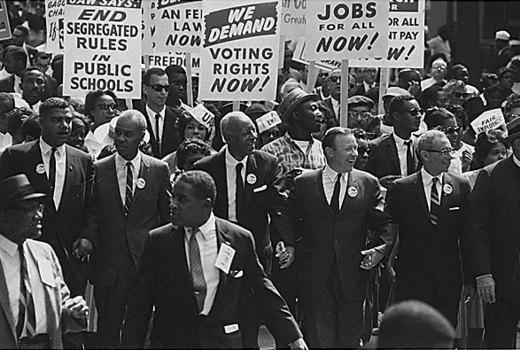
A typical toolkit includes public marches, civil disobedience, petition drives, lobbying legislators, strategic litigation, media campaigns, and local community organizing. The specific mix depends on the legal environment, the urgency of the cause, and which audience is being targeted.
How do activists and reformers differ from revolutionaries?
Reformers generally seek to change policies or institutions while preserving the broader political structure, whereas revolutionaries aim to dismantle and replace that structure entirely. The line can blur in practice, and some historical figures have been labeled both depending on the era and the observer.
Are there common misconceptions about activists and reformers?
One frequent misconception is that organized activism is a modern or single-country phenomenon, when in fact structured reform movements have existed on every inhabited continent for centuries. Another is that all activism is confrontational, when a large share of the work involves quiet legislative drafting, community service, and education.
How can I follow current activism and reform efforts?
Local newspaper coverage, nonprofit newsletters, and the social-media pages of established organizations are reliable ways to track ongoing campaigns. Academic journals in political science and sociology also publish analyses of emerging movements before they reach mainstream headlines.